Editor, Webmaster: Phil Cartwright Editor@earlyjas.org
 | |  | |  |
 | |  | |  |
|
|
| ||||||||||||||||||||||||||||||||||||||||||||||||||||||||||||||||||||||||||||||||||||||||||||||||||||||
| Earlville Association for Ragtime Lovers Yearning for Jazz Advancement and Socialization |
EARLYJAS
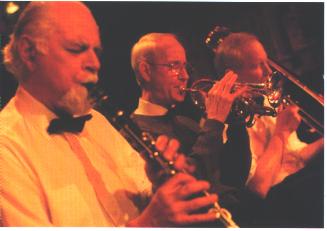
Norrie Cox has been carrying the torch for
traditional New Orleans jazz for three or four
decades. In addition to performing in numerous
jazz bands, Norrie has spent many years
encouraging and leading elementary and high
school students into the fascinating world of New
Orleans jazz.
Also, he has led his own New Orleans band, the
New Orleans Stompers, for the past 25 years or so.
Perhaps you remember that his band played the
Earlyjas Festival in 2000. I have been fortunate to
play several jazz clubs and tours with Norrie’s band
beginning in 2000.
traditional New Orleans jazz for three or four
decades. In addition to performing in numerous
jazz bands, Norrie has spent many years
encouraging and leading elementary and high
school students into the fascinating world of New
Orleans jazz.
Also, he has led his own New Orleans band, the
New Orleans Stompers, for the past 25 years or so.
Perhaps you remember that his band played the
Earlyjas Festival in 2000. I have been fortunate to
play several jazz clubs and tours with Norrie’s band
beginning in 2000.
Norrie Cox Charlie DeVore Jim Klippert
The leader of the band is Norrie, of course, on clarinet. He lives in Milwaukee. Regulars are three musicians
from the Minneapolis-St. Paul area who were part of the house band for Garrison Keillor’s Prairie Home
Companion: Charley Devore, cornet, Bill Evans, string bass; and Doggie Berg, drums. They also were core
members of the Hall Brothers Jazz Band at the Emporium of Jazz in Mendota, MN. Charlie and Doggie have
the distinction of integrating a Black band in New Orleans around 1960. They were promptly arrested and
spent the night in jail!
The Stompers banjo player was Mike Carrell. He became ill in 2000, and eventually died of cancer.
Trombone player in the band is Jim Klippert from the San Francisco Bay area. Yes, you may recognize Jim as
the son of clarinet player Moe Klippert, founder of the Rubber City Retreads and the Hymns of Dixieland.
In mid-October, the Stompers played at the Juvae Jazz Club in Decatur, Illinois, and at the Great River Jazz
Club in Hannibal, Missouri.
Unfortunately, Doggie Berg had back surgery and was unable to make the trip. Filling in for him was a
young drummer, Chuck Devore, Charley’s son. He did a great job and was only half the age of the rest of
us.
Filling in for Charley was Kim Cusack, the great reed player who has been with the Salty Dogs for a hundred
years or so. Kim was suffering from a broken foot but that did not impair his playing. His usual groupies
were with him: Joyce, Kim’s sister, and his wife, Eileen, Kim’s supporter and videographer for the past 30+
years.
I am delighted to report that traditional jazz is alive and well in the Central Illinois and Eastern Missouri
areas. These clubs are vibrant and bring in many great traditional jazz bands. I met several of their key
people and I hope that we can work with them and other jazz clubs in the Midwest to support bands and our
love for traditional jazz.
Whenever a band goes on tour, even a short one, there is always something, non-musical, that competes with
the memories of some great music. In this case, we got our signals crossed. Sunday morning we left Decatur
to head for Hannibal, MO. Unfortunately, Jim Klippert was left behind with no way to get to Hannibal!
After a series of frantic phone calls (and not everyone had a cell phone), Kim Cusack saved the day and
returned to pick up Jim and deliver him to Hannibal in time for the job!
Submitted by Phil Cartwright
from the Minneapolis-St. Paul area who were part of the house band for Garrison Keillor’s Prairie Home
Companion: Charley Devore, cornet, Bill Evans, string bass; and Doggie Berg, drums. They also were core
members of the Hall Brothers Jazz Band at the Emporium of Jazz in Mendota, MN. Charlie and Doggie have
the distinction of integrating a Black band in New Orleans around 1960. They were promptly arrested and
spent the night in jail!
The Stompers banjo player was Mike Carrell. He became ill in 2000, and eventually died of cancer.
Trombone player in the band is Jim Klippert from the San Francisco Bay area. Yes, you may recognize Jim as
the son of clarinet player Moe Klippert, founder of the Rubber City Retreads and the Hymns of Dixieland.
In mid-October, the Stompers played at the Juvae Jazz Club in Decatur, Illinois, and at the Great River Jazz
Club in Hannibal, Missouri.
Unfortunately, Doggie Berg had back surgery and was unable to make the trip. Filling in for him was a
young drummer, Chuck Devore, Charley’s son. He did a great job and was only half the age of the rest of
us.
Filling in for Charley was Kim Cusack, the great reed player who has been with the Salty Dogs for a hundred
years or so. Kim was suffering from a broken foot but that did not impair his playing. His usual groupies
were with him: Joyce, Kim’s sister, and his wife, Eileen, Kim’s supporter and videographer for the past 30+
years.
I am delighted to report that traditional jazz is alive and well in the Central Illinois and Eastern Missouri
areas. These clubs are vibrant and bring in many great traditional jazz bands. I met several of their key
people and I hope that we can work with them and other jazz clubs in the Midwest to support bands and our
love for traditional jazz.
Whenever a band goes on tour, even a short one, there is always something, non-musical, that competes with
the memories of some great music. In this case, we got our signals crossed. Sunday morning we left Decatur
to head for Hannibal, MO. Unfortunately, Jim Klippert was left behind with no way to get to Hannibal!
After a series of frantic phone calls (and not everyone had a cell phone), Kim Cusack saved the day and
returned to pick up Jim and deliver him to Hannibal in time for the job!
Submitted by Phil Cartwright
| ||||||||||||||||||||||||||||||||||||||||||||||||||||||||||||||||||||||||||||||||||||||||||||||||||||||||||||||||||||||||||||||||||||||||||||||||||||||||||||||||||||||||||||||||||||||||||