
Editor, Webmaster: Phil Cartwright Editor@earlyjas.org
 | |  | |  |
 | |  | |  |

|
Sophie Tucker
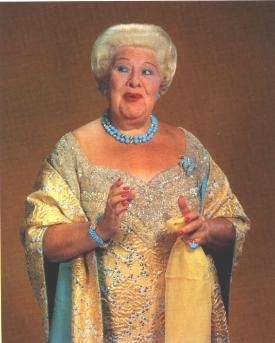
The “Last of the Red Hot Mamas” was born in Russia in 1884
while her mother was emigrating to America to join her
husband, also a Russian Jew. Her birth name was Sophia Kalish,
but the family soon took the last name Abuza and moved to
Connecticut, where Sophie grew up working in her family's
restaurant.
Playing piano to accompany her sister at amateur shows, Sophie
quickly became an audience favorite; they called for "the fat
girl." At age 13, she already weighed 145 pounds.
She married Louis Tuck in 1903, and they had a son, Bert, but
she divorced Tuck fairly quickly. Leaving Bert with her parents
in 1906, she went to New York, changed her name to Tucker,
and began singing at amateur shows to support herself.
She was required to wear blackface by by managers who felt
that she would not otherwise be accepted, since she was "so big
and ugly" as one manager put it. She joined a burlesque show in
1908, and, when she found herself without her makeup or any of
her luggage one night, she went on without her blackface, was a
hit with the audience, and never wore the blackface again.
while her mother was emigrating to America to join her
husband, also a Russian Jew. Her birth name was Sophia Kalish,
but the family soon took the last name Abuza and moved to
Connecticut, where Sophie grew up working in her family's
restaurant.
Playing piano to accompany her sister at amateur shows, Sophie
quickly became an audience favorite; they called for "the fat
girl." At age 13, she already weighed 145 pounds.
She married Louis Tuck in 1903, and they had a son, Bert, but
she divorced Tuck fairly quickly. Leaving Bert with her parents
in 1906, she went to New York, changed her name to Tucker,
and began singing at amateur shows to support herself.
She was required to wear blackface by by managers who felt
that she would not otherwise be accepted, since she was "so big
and ugly" as one manager put it. She joined a burlesque show in
1908, and, when she found herself without her makeup or any of
her luggage one night, she went on without her blackface, was a
hit with the audience, and never wore the blackface again.
She briefly appeared with the Ziegfield Follies, but her popularity with audiences made her unpopular
with the female stars, who refused to go on stage with her.
Tucker's stage image emphasized her "fat girl" image but also a humorous suggestiveness. She sang
songs like "I Don't Want to Be Thin," "Nobody Loves a Fat Girl, But Oh How a Fat Girl Can Love." She
introduced in 1911 the song which would become her trademark: "Some of These Days."
She added jazz and sentimental ballads to her ragtime repertoire, and, in the 1930s, when American
vaudeville was dying, she took to playing England. She made eight movies and appeared on radio and,
as it became popular, television.
She became involved in union organizing with the American Federation of Actors, and was elected
president of the organization in 1938. The AFA was eventually absorbed into its rival Actors' Equita as
the American Guild of Variety Artists.
With her financial success, she was able to be generous to others, starting the Sophie Tucker foundation
in 1945 and endowing in 1955 a theater arts chair at Brandeis University.
She married twice more: Frank Westphal, her pianist, in 1914, divorced in 1919, and Al Lackey, her fan-
turned-personal-manager, in 1928, divorced in 1933.
Her fame and popularity lasted more than fifty years; she never retired, playing the Latin Quarter in
New York only months before she died in 1966. Always partly self-parody, the core of her act remained
vaudeville: earthy, suggestive songs, whether jazzy or sentimental, taking advantage of her enormous
voice.
If you Google “Sophie Tucker” on the web, you can see pictures of her and hear clips of her singing.
For example: A 1910 recording of Tucker singing "Reuben Rag." You can learn that a play was written
about Sophie with the appropriate subtitle: "Red Hot Yiddishe Mama."
There are essays about her life and even a bit about her trip to the Barbary Coast in 1911. For the
macabre: You can see a photo of her final resting place after she died of lung cancer in 1966. Of course,
you can buy her recordings on the internet.
with the female stars, who refused to go on stage with her.
Tucker's stage image emphasized her "fat girl" image but also a humorous suggestiveness. She sang
songs like "I Don't Want to Be Thin," "Nobody Loves a Fat Girl, But Oh How a Fat Girl Can Love." She
introduced in 1911 the song which would become her trademark: "Some of These Days."
She added jazz and sentimental ballads to her ragtime repertoire, and, in the 1930s, when American
vaudeville was dying, she took to playing England. She made eight movies and appeared on radio and,
as it became popular, television.
She became involved in union organizing with the American Federation of Actors, and was elected
president of the organization in 1938. The AFA was eventually absorbed into its rival Actors' Equita as
the American Guild of Variety Artists.
With her financial success, she was able to be generous to others, starting the Sophie Tucker foundation
in 1945 and endowing in 1955 a theater arts chair at Brandeis University.
She married twice more: Frank Westphal, her pianist, in 1914, divorced in 1919, and Al Lackey, her fan-
turned-personal-manager, in 1928, divorced in 1933.
Her fame and popularity lasted more than fifty years; she never retired, playing the Latin Quarter in
New York only months before she died in 1966. Always partly self-parody, the core of her act remained
vaudeville: earthy, suggestive songs, whether jazzy or sentimental, taking advantage of her enormous
voice.
If you Google “Sophie Tucker” on the web, you can see pictures of her and hear clips of her singing.
For example: A 1910 recording of Tucker singing "Reuben Rag." You can learn that a play was written
about Sophie with the appropriate subtitle: "Red Hot Yiddishe Mama."
There are essays about her life and even a bit about her trip to the Barbary Coast in 1911. For the
macabre: You can see a photo of her final resting place after she died of lung cancer in 1966. Of course,
you can buy her recordings on the internet.
| Earlville Association for Ragtime Lovers Yearning for Jazz Advancement and Socialization |