
Editor, Webmaster: Phil Cartwright Editor@earlyjas.org
 | |  | |  |
 | |  | |  |

|
Regardless of the circumstances surrounding the first recordings of jazz music, by
the early 1920s jazz was ready to take center stage as an internationally
recognized music, and as had been in the case in earlier decades, it was the
vocalist who dominated the spotlight.
the early 1920s jazz was ready to take center stage as an internationally
recognized music, and as had been in the case in earlier decades, it was the
vocalist who dominated the spotlight.
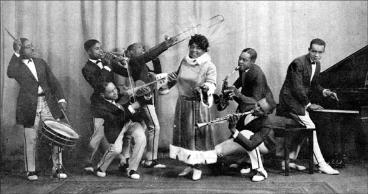
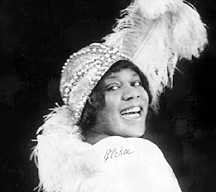
Bessie Smith
Mamie Smith and her Jazz Hounds
RACE RECORDS
Probably the most unusual reason for the popularity and success of jazz and blues singers was the record
label's devotion to the production of race records during the 1920's. Race records were subsidiary labels
for the major recording companies, and were introduced after the release of Crazy Blues by Mamie
Smith, a black blues singer of the '20's. She sold thousands of copies in the black ghettos of Northern
industrial cities like New York, Detroit and Chicago. Almost immediately a talent search began. The goal
was to find new blues talent as well as to locate some of the older rural blues artists. These singers, and
the New Orleans style jazz bands (also discovered during the search) were brought to Chicago and New
York to record material for these new labels.
RURAL BLUES
The style known as "rural blues" flourished in the South during the first two decades of the twentieth
century but became much more popular after race recordings appeared in the '20's. Dominated by men,
this style is probably the oldest form of blues singing we know about.
CLASSIC BLUES
Out of the efforts to secure talent for the newly formed race record labels of the '20's, there came the
recordings known as the "classic blues." Usually performed by women, this style of blues seemed much
more sophisticated than its forerunner the rural blues sung by Mississippi Delta and North Texas
Panhandle males. For one thing, classic blues singers usually recorded and performed with jazz rhythm
sections backing them. Call and response - which in rural performances usually took place between the
male singer and his guitar - took place between female vocalists and their top instrumental jazz player.
This meant that the quality of the exchanges were quite high, as can be evidenced by listening to
trumpeters such as Louis Armstrong or Jabbo Smith, clarinetist Sidney Bechet or trombonist Jack
Teagarden as they performed back up roles on recordings. The subject matter of the classic blues was
often concerned with the black urban point of view and the lifestyle of the '20's. The rural style of
previous decades was considered old. At this point, the unique background and influence of Louis
Armstrong, as both jazz trumpeter and vocalist made an astonishing contribution to jazz as an art.
Armstrong brought his clear, mature understanding and familiarity with the instrumental style of
melodic statement into his singing with an ease that no one else could begin to match. The results of his
early efforts changed jazz vocals forever.
Probably the most unusual reason for the popularity and success of jazz and blues singers was the record
label's devotion to the production of race records during the 1920's. Race records were subsidiary labels
for the major recording companies, and were introduced after the release of Crazy Blues by Mamie
Smith, a black blues singer of the '20's. She sold thousands of copies in the black ghettos of Northern
industrial cities like New York, Detroit and Chicago. Almost immediately a talent search began. The goal
was to find new blues talent as well as to locate some of the older rural blues artists. These singers, and
the New Orleans style jazz bands (also discovered during the search) were brought to Chicago and New
York to record material for these new labels.
RURAL BLUES
The style known as "rural blues" flourished in the South during the first two decades of the twentieth
century but became much more popular after race recordings appeared in the '20's. Dominated by men,
this style is probably the oldest form of blues singing we know about.
CLASSIC BLUES
Out of the efforts to secure talent for the newly formed race record labels of the '20's, there came the
recordings known as the "classic blues." Usually performed by women, this style of blues seemed much
more sophisticated than its forerunner the rural blues sung by Mississippi Delta and North Texas
Panhandle males. For one thing, classic blues singers usually recorded and performed with jazz rhythm
sections backing them. Call and response - which in rural performances usually took place between the
male singer and his guitar - took place between female vocalists and their top instrumental jazz player.
This meant that the quality of the exchanges were quite high, as can be evidenced by listening to
trumpeters such as Louis Armstrong or Jabbo Smith, clarinetist Sidney Bechet or trombonist Jack
Teagarden as they performed back up roles on recordings. The subject matter of the classic blues was
often concerned with the black urban point of view and the lifestyle of the '20's. The rural style of
previous decades was considered old. At this point, the unique background and influence of Louis
Armstrong, as both jazz trumpeter and vocalist made an astonishing contribution to jazz as an art.
Armstrong brought his clear, mature understanding and familiarity with the instrumental style of
melodic statement into his singing with an ease that no one else could begin to match. The results of his
early efforts changed jazz vocals forever.
| Earlville Association for Ragtime Lovers Yearning for Jazz Advancement and Socialization |
EARLYJAS